 PBXDom
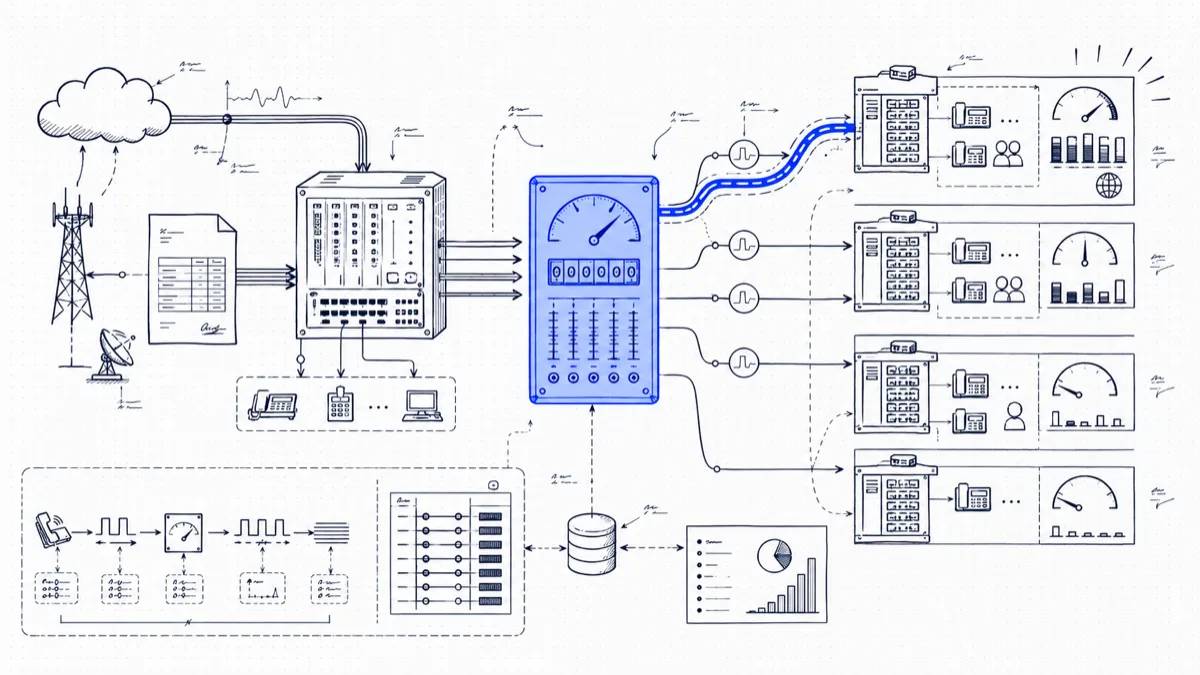
The phone bill arrives each month, IT codes it to “Telecom - General,” finance pays it, and the review stops at the total. The bill says $6,400, last quarter it said $6,100, the difference looks like noise, so finance approves it. Under that cover a sales team runs up $900 a month in international calls to a region the company stopped selling into, and a warehouse keeps a line that has carried eleven calls since 2019.
A shared budget is camouflage. The fix is old, boring, and effective: chargeback. Price every call, attribute it to the department whose extension made it, and put the number on that department’s monthly cost report. Managers change their teams’ habits within two cycles, because each one now owns a piece of a bill they had not seen before.
Shared budgets hide waste
Pool telecom into one line item and three things go wrong at once. No manager owns a specific cost, so no manager questions it. One team’s waste averages out across the rest. And the feedback loop is gone: the rep dialing a premium international route has no idea each call costs $4, and the person who could tell them cannot see who dialed.
The individual numbers stay small, and small numbers survive. A $75-per-month unused line is noise on a $6,400 bill; on a warehouse cost center that otherwise spends $140 on telecom, it stands out at first glance.
Chargeback or showback? Start with showback
Two flavors of the same machinery:
- Showback: each department gets a monthly report of its phone costs. Informational; no money moves between cost centers.
- Chargeback: the costs hit each department’s actual budget through journal entries.
Start with showback. It needs no finance-system changes and no negotiation about budget transfers, and it delivers the core benefit, visibility, from the first report. Run showback for a quarter, let managers argue with the numbers and help you fix the mapping errors, then graduate to formal chargeback if your finance team wants the allocation in the GL. Several of our customers stopped at showback; the reports on their own killed the waste.
Step 1: map extensions to departments
This is the unglamorous foundation. Build a table: extension, user name, department, cost center code. Sources, in order of usefulness:
- The PBX configuration itself (extension names are often half-maintained; treat them as a starting point)
- The HR or Active Directory department field, joined by user name
- A short email to department admins asking them to confirm their extension list
Expect the first pass to be 90 percent right, and expect the showback reports themselves to surface the remaining errors fast. A bill for someone else’s calls motivates a manager to correct a mapping better than any request from IT. Don’t forget the unowned extensions, the conference rooms and lobby phones: give them their own “Facilities/Shared” bucket rather than leaving them unallocated, because unallocated cost grows unchecked.
Then keep the table alive. Add a line to the joiner/mover/leaver checklist: update the extension mapping. A mapping six months stale produces reports managers stop trusting.
Step 2: price calls against your carrier rates
Your PBX call records contain the raw material for costing a call: date, time, extension, dialed number, duration. The missing piece is a price, and that comes from your carrier rate plan: per-minute rates by destination (local, national, mobile, each international zone), per-call connection fees, billing increments (6-second vs full-minute rounding swings the cost of short calls), and monthly recurring line charges.
Load those rates into whatever does your costing, and the system prices each call the moment it completes. Two side benefits fall out for free. You get an estimated bill before the invoice arrives: if the estimate says $6,380 and the carrier invoice says $7,150, you have a concrete discrepancy to dispute instead of a vague feeling. You also see cost spikes in hours instead of at month-end: a hacked voicemail box pumping calls to international premium numbers shows up as a cost alert the same day it starts, while the carrier invoice would have told you weeks later.
Allocate the monthly recurring charges too: divide trunk and line rental across departments by headcount or by usage share, and state the method on the report so the argument happens once.
Step 3: the monthly report
One page per department, emailed to its manager on the first business day of the month:
| Section | Contents |
|---|---|
| Headline | Total cost, vs last month, vs department average |
| Breakdown | Local / national / mobile / international minutes and cost |
| Top 10 | Most expensive calls, with extension, destination, duration |
| Flags | Premium numbers, after-hours international, idle lines |
The “top 10 most expensive calls” table does most of the work. It converts an abstract total into specific, askable questions.
Two real patterns we have seen this surface. A sales team’s international spend: $850–950 a month in calls to a market the company had exited. The rep had moved to a domestic territory but kept courtesy-calling old contacts on the company’s dime, and the manager ended it with one conversation. And the warehouse line: a POTS line plus extension billing $68 a month that the report showed making zero calls for six straight months. It had served a fax machine decommissioned in 2018, and it stayed on the bill because no report had put it in front of anyone with the authority to cancel it.
Getting finance on board
Finance teams like chargeback in principle and distrust new allocation methods in practice. Three things win them over: show the mapping table so they can see each cost trace to a real cost center, reconcile your total against the carrier invoice each month (the two should agree within a couple of percent, and you should be able to explain the gap), and let them pick the timing of the showback-to-chargeback transition. Offer the carrier-reconciliation report as a gift; finance has been approving that invoice on faith for years.
Where PBXDom fits
The hard part of chargeback is the process; the tooling should be easy. PBXDom’s call accounting handles the mechanical work: the collector reads call records from your existing Cisco, Avaya, Mitel, Panasonic, 3CX, or Asterisk system, prices each call in real time against your carrier rate plan, maps extensions to departments once, and produces the monthly per-department reports and toll-fraud alerts at the other end. Check your PBX before choosing guided or self-setup for the 14-day trial.