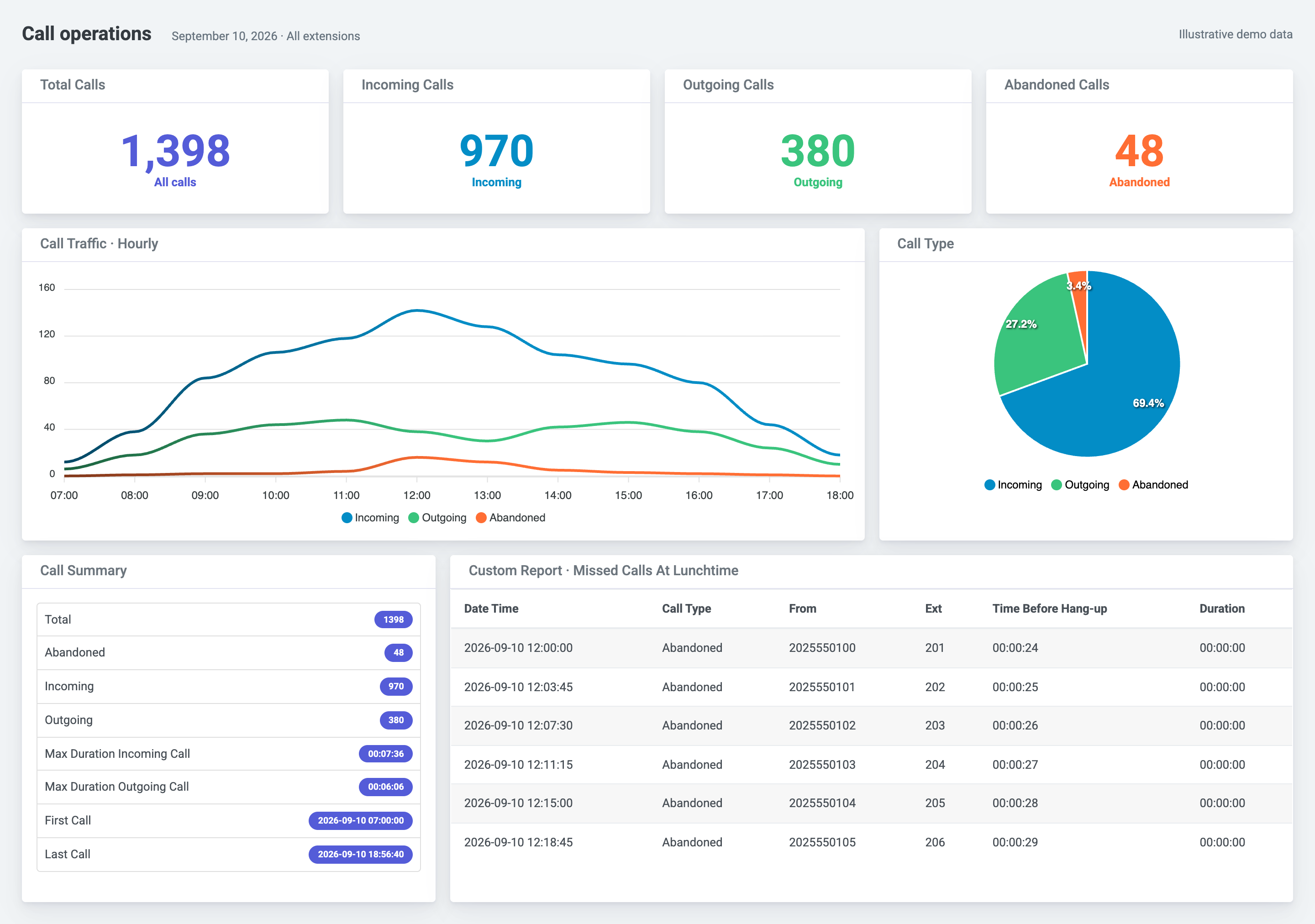
Every organization that runs on a PBX faces the same blind spot: calls come in and go out all day, but nobody can say with confidence how many were answered, how long callers waited, or which departments are overloaded. The pages in this section take that general problem and ground it in a specific setting. The starting point is the same everywhere — PBXDom connects to the phone system you already own, reads its call records, and turns them into live dashboards and reports — but what you do with that visibility differs by industry.

The page on government agencies and city offices is a good example of the pattern. Public offices answer to residents and council members, so the questions are about accountability: proving that citizen calls are answered within a reasonable time, spotting which departments need more staff at which hours, and documenting service levels with data instead of anecdotes. A commercial call center looking at the same dashboards would care more about agent productivity and abandon rates; a clinic or school district would care about reaching the right person during an emergency. The metrics are shared, but the thresholds and the audience for the reports change.

If you do not see your industry listed yet, the underlying approach still applies: connect your existing PBX, watch the traffic, and decide what good service looks like for your callers. The demo videos show what those dashboards look like in practice, and the pricing page explains how a trial works against your own call data.